Co-design in Design Degree Final Projects: What Ten Participatory Projects Teach UsAn analysis of the Final Degree Projects in Design at EsdapC (2013–2024) reviewed the ten projects that explicitly applied co-design — just 5% of the total — to understand how students turn users into co-authors of the design process.
The projects are split almost evenly between education (adapting school spaces, learning games) and healthcare/care settings (therapy, rehabilitation, autonomy for people with disabilities), nearly always in partnership with hospitals, schools, or associations, with authorship predominantly female.
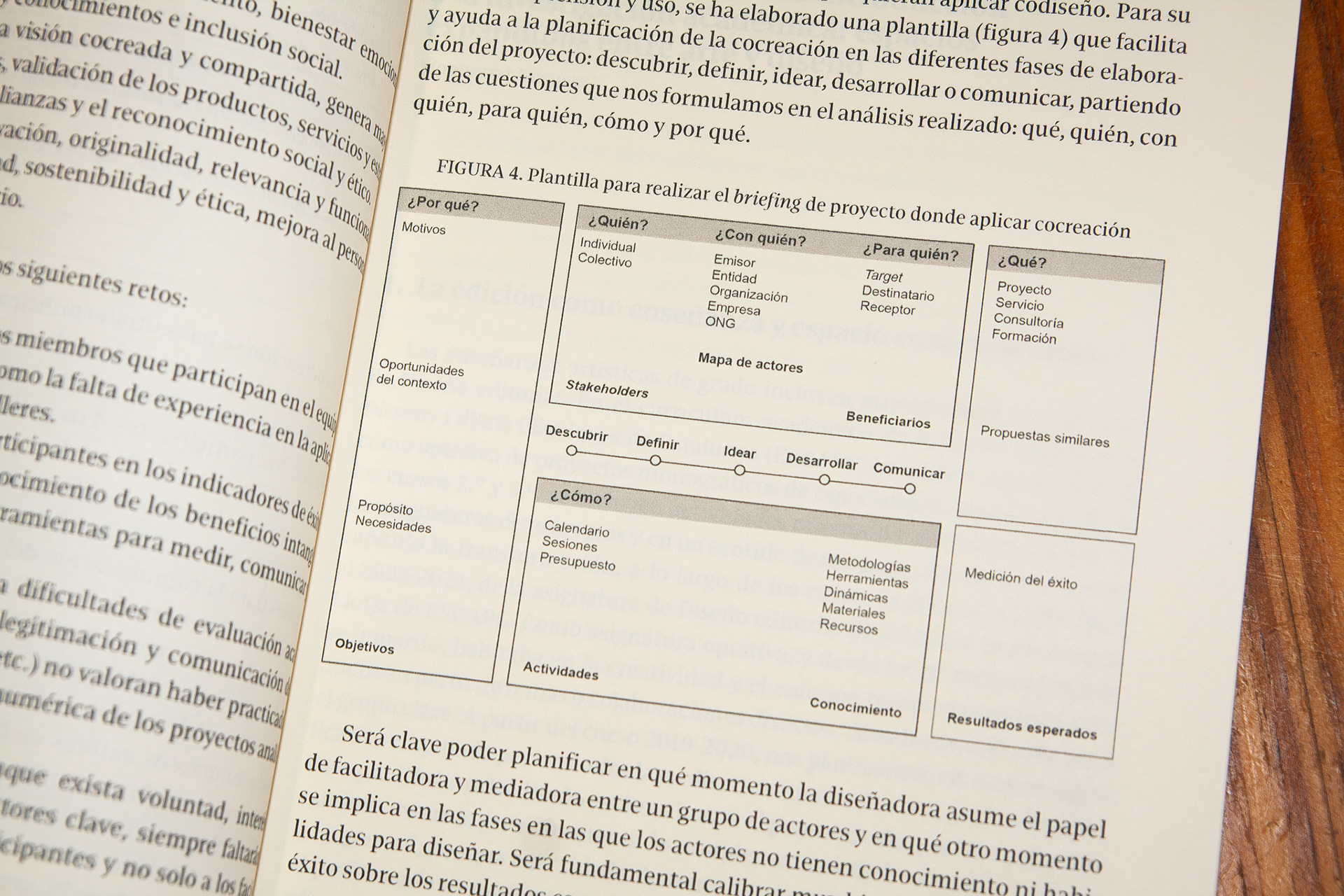
The study identifies five phases of co-creation — discover, define, ideate, develop, and communicate — and shows which tools were used at each stage: active observation and interviews at the start, workshops and brainstorming for ideation, prototyping and testing for development, and exhibitions or collective presentations to communicate results. Seven of the ten projects organized structured workshops spanning several sessions of 1 to 2.5 hours each.


Among the challenges identified: the difficulty of measuring the intangible benefits of co-creation, the lack of recognition within academic evaluation and award circuits, and the need for the initial briefing to already capture who participates and at what stage — not just what is being designed.
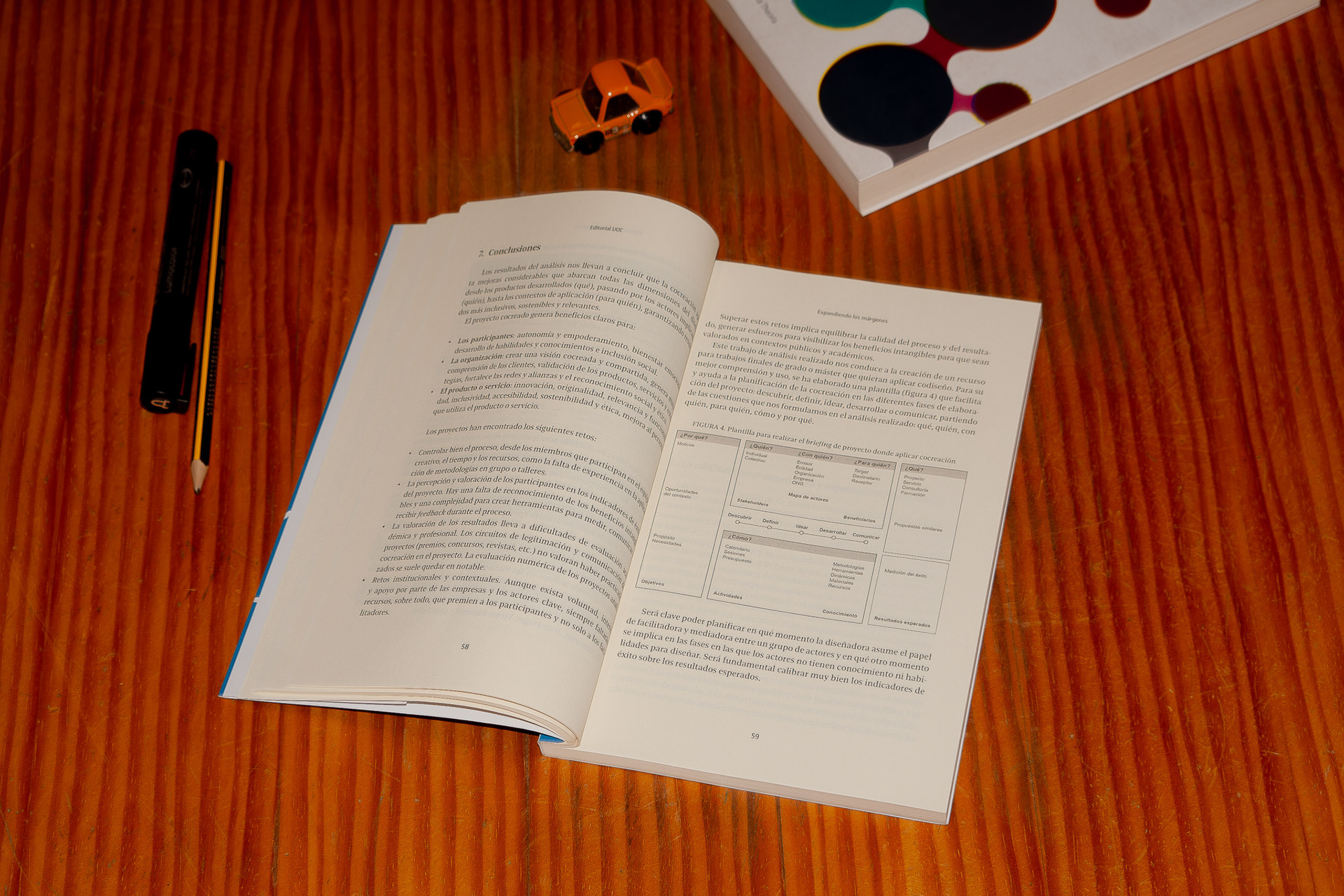
Based on the analysis, the study proposes a briefing template for anyone wanting to apply co-design in their own projects, organized around the questions what, why, with whom, for whom, and how.