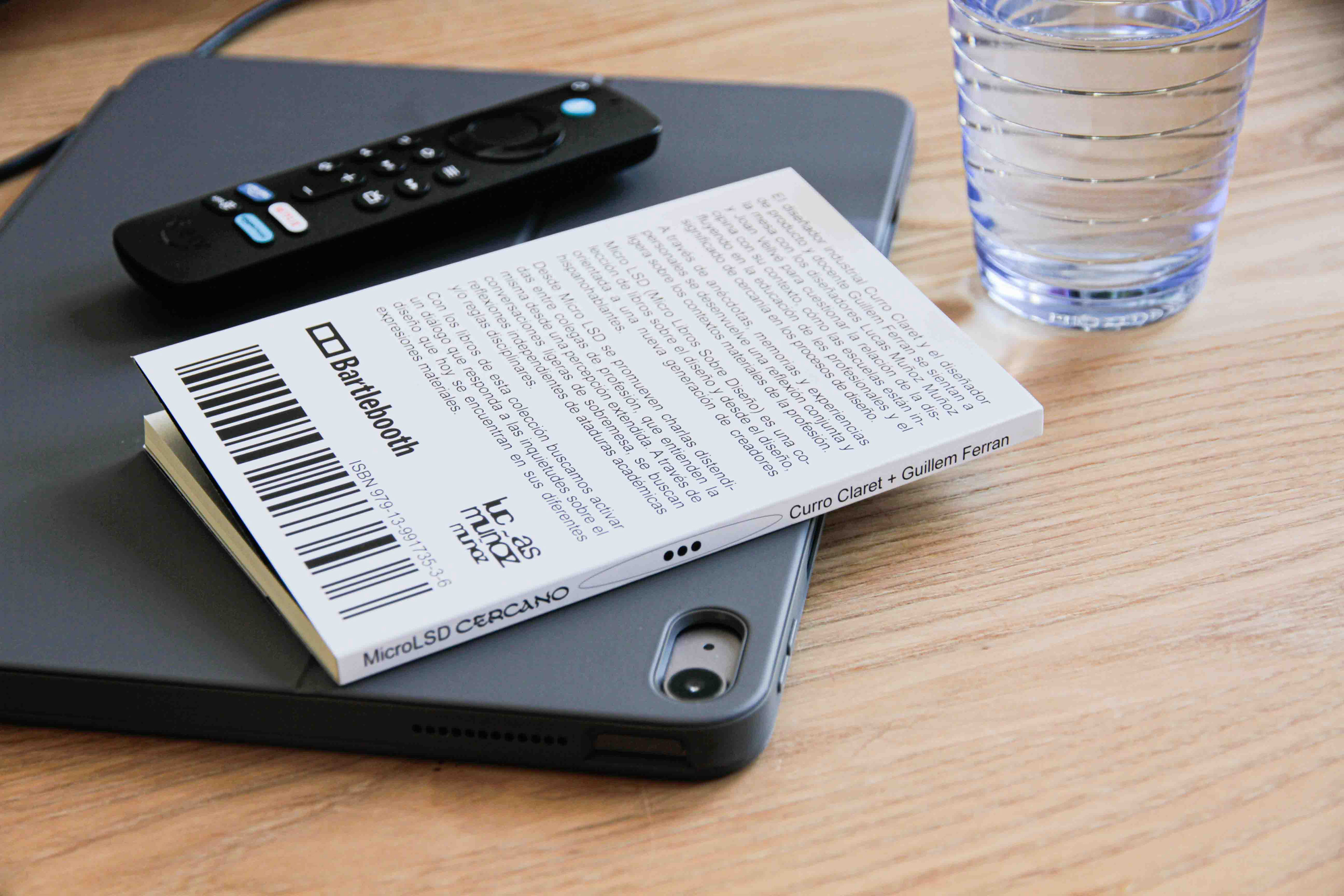
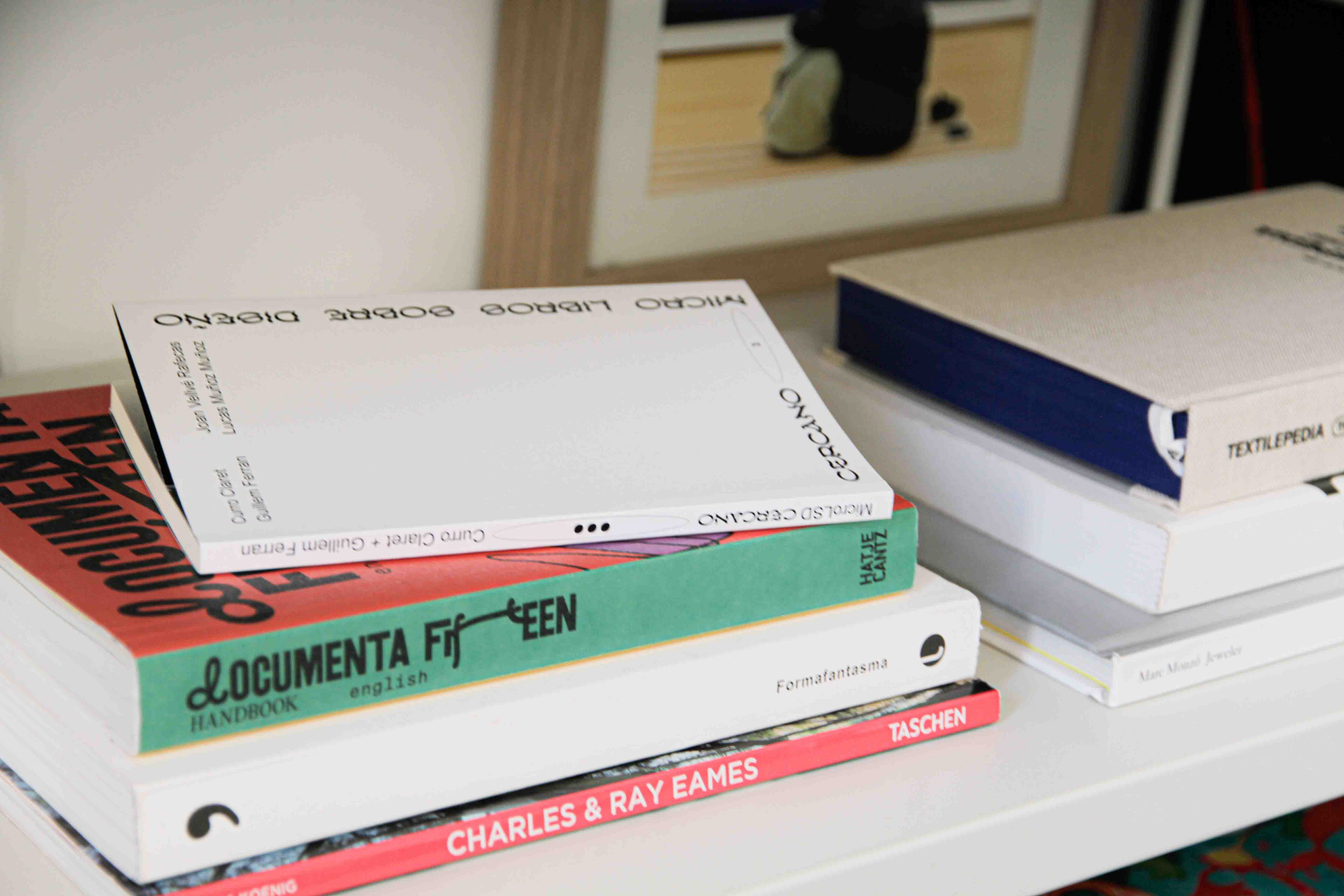
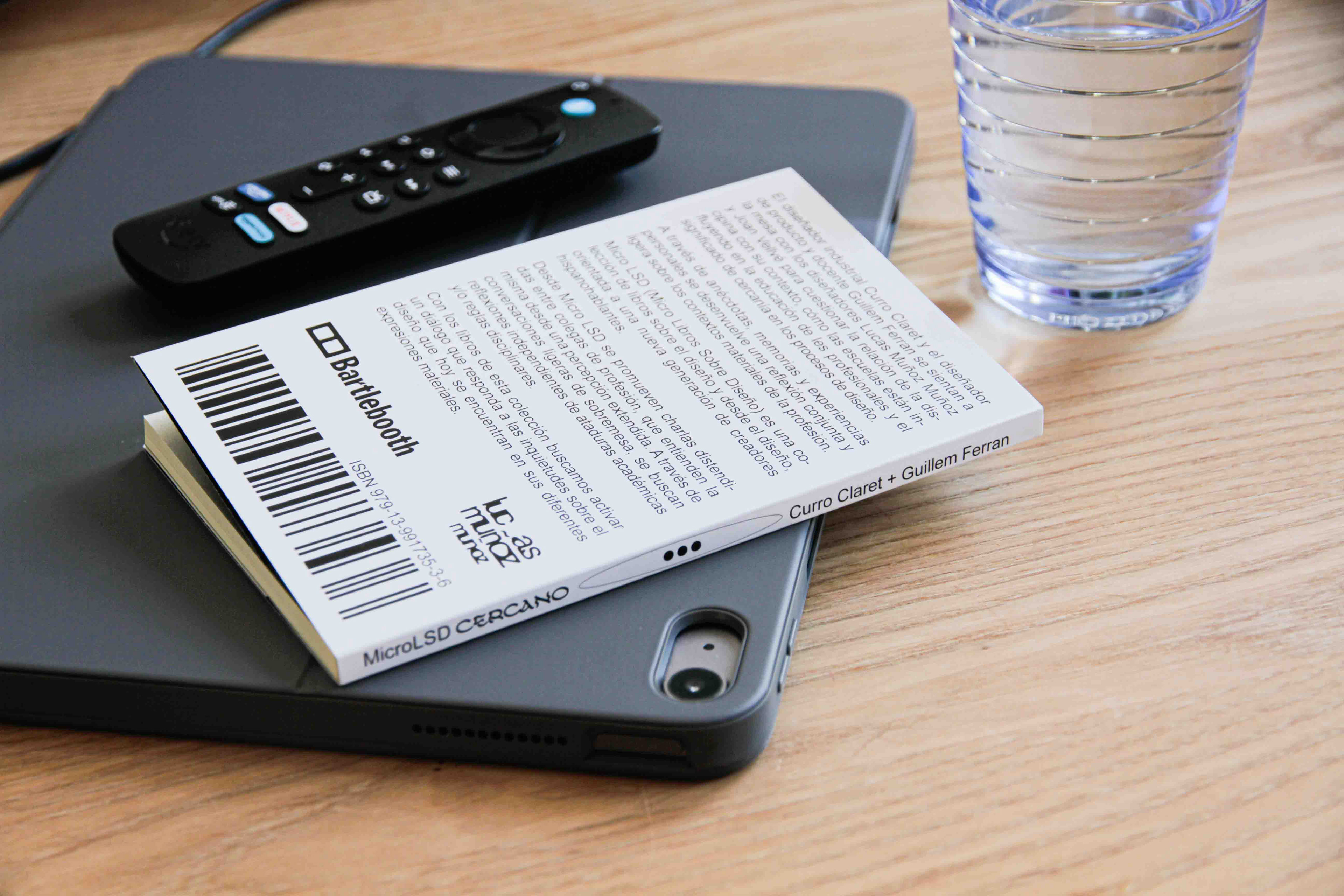
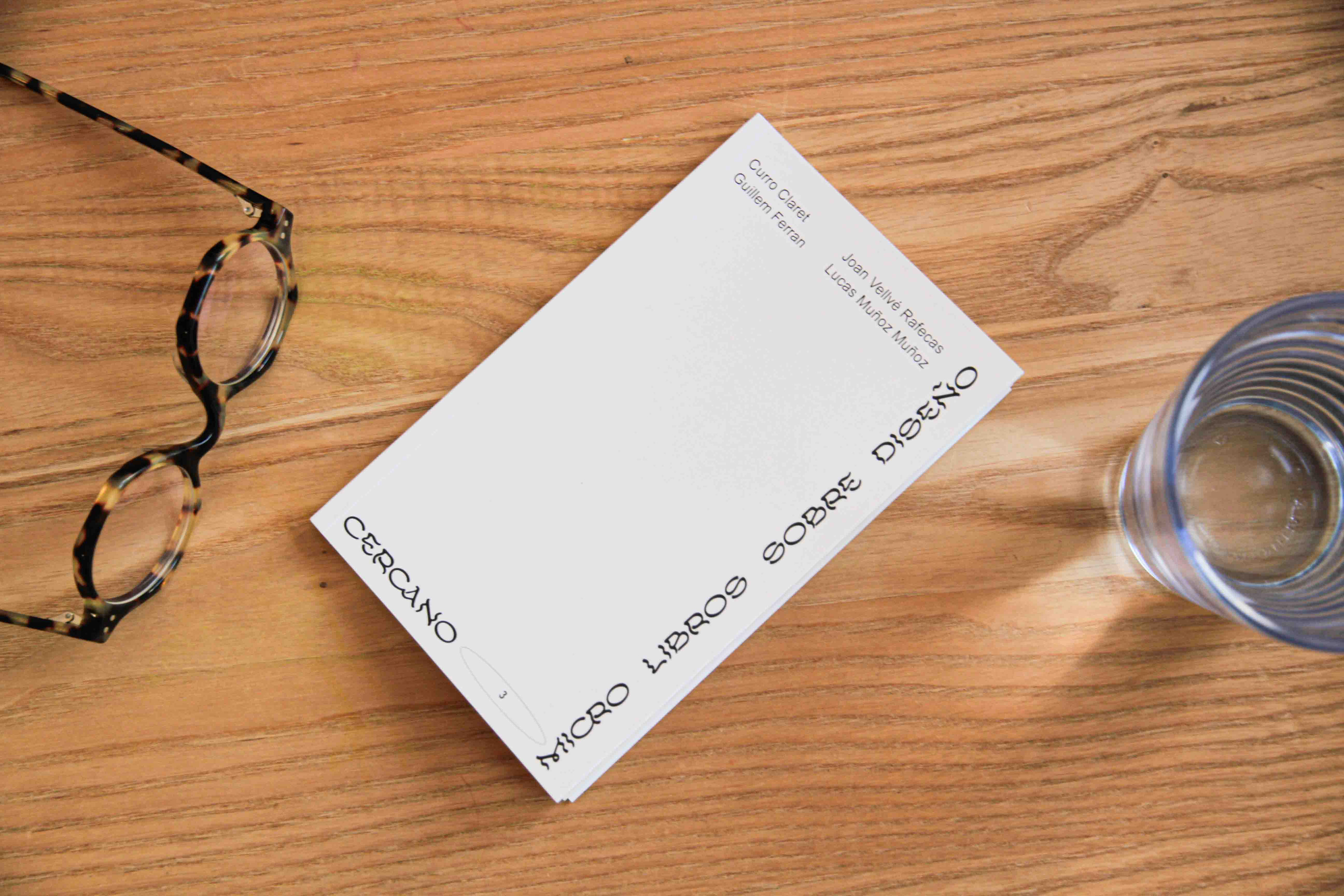
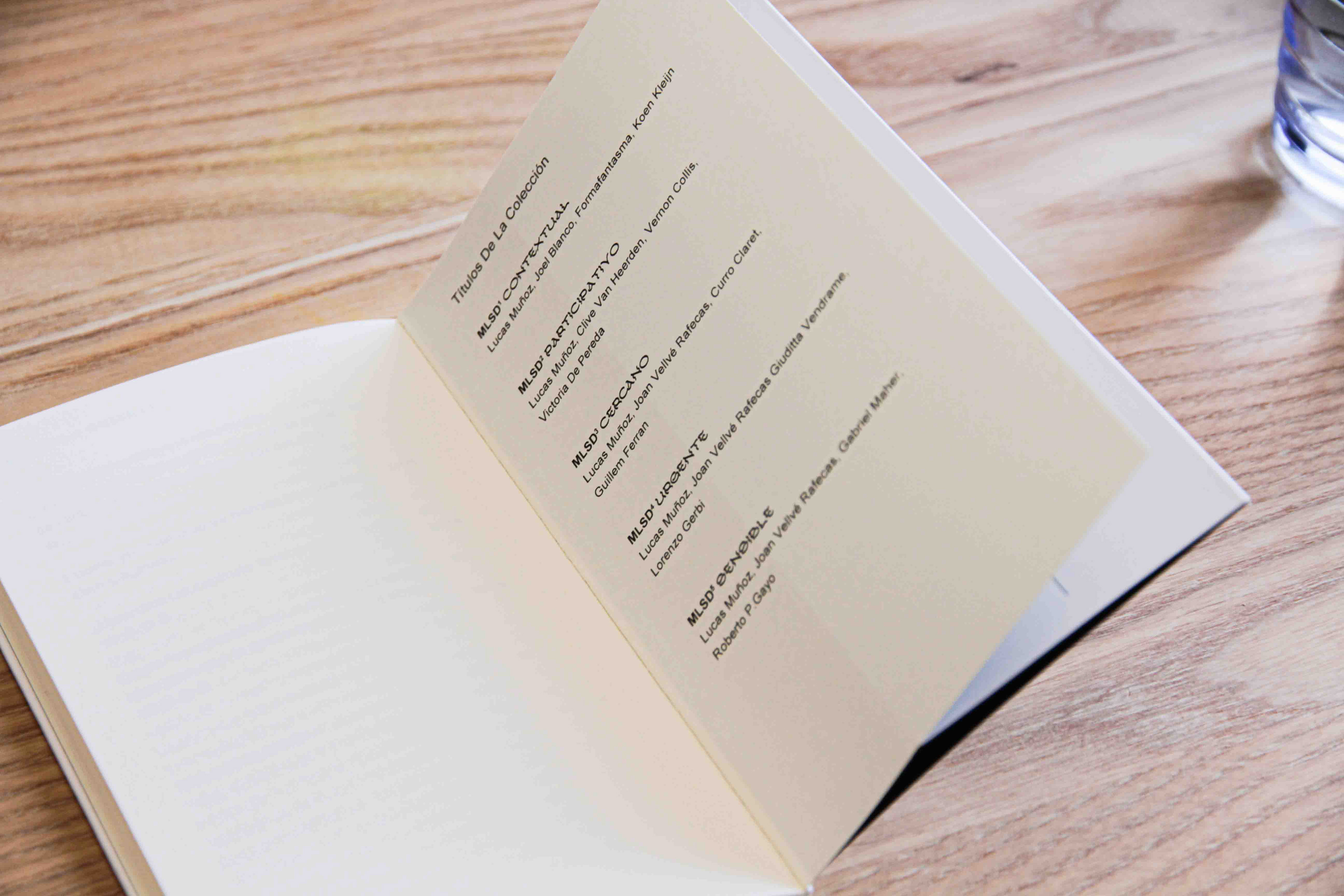
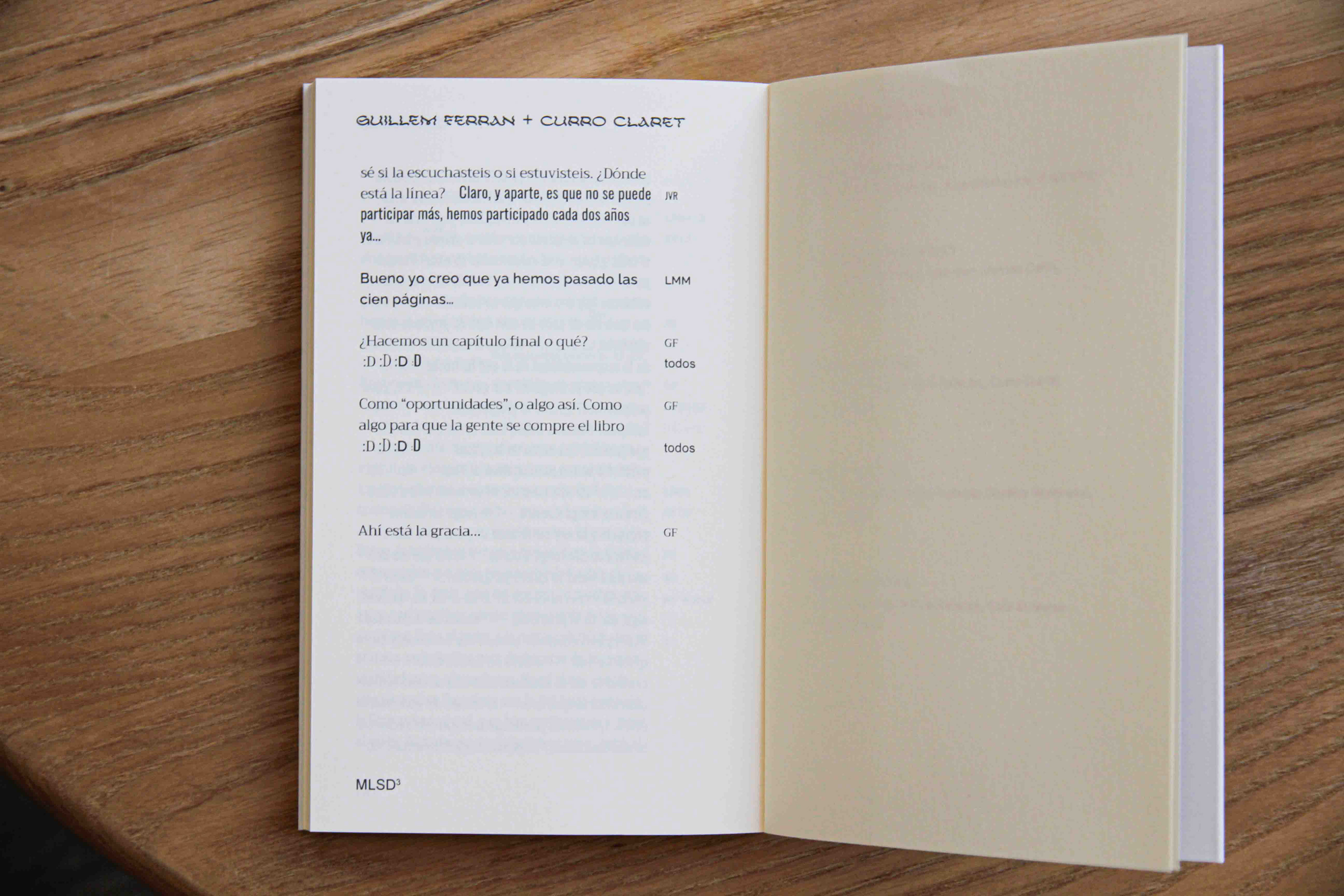
Cercano, the third volume of the Micro Libros Sobre Diseño series edited by Lucas Muñoz Muñoz and Joan Vellvé Rafecas, records a lunchtime conversation held in Barcelona in June 2022 between the two editors and designers Curro Claret and Guillem Ferran. Its title — a Spanish adjective meaning near or close — frames an open-ended dialogue about what it means for a design project, a process, or a professional relationship to be genuinely proximate to the people it concerns.
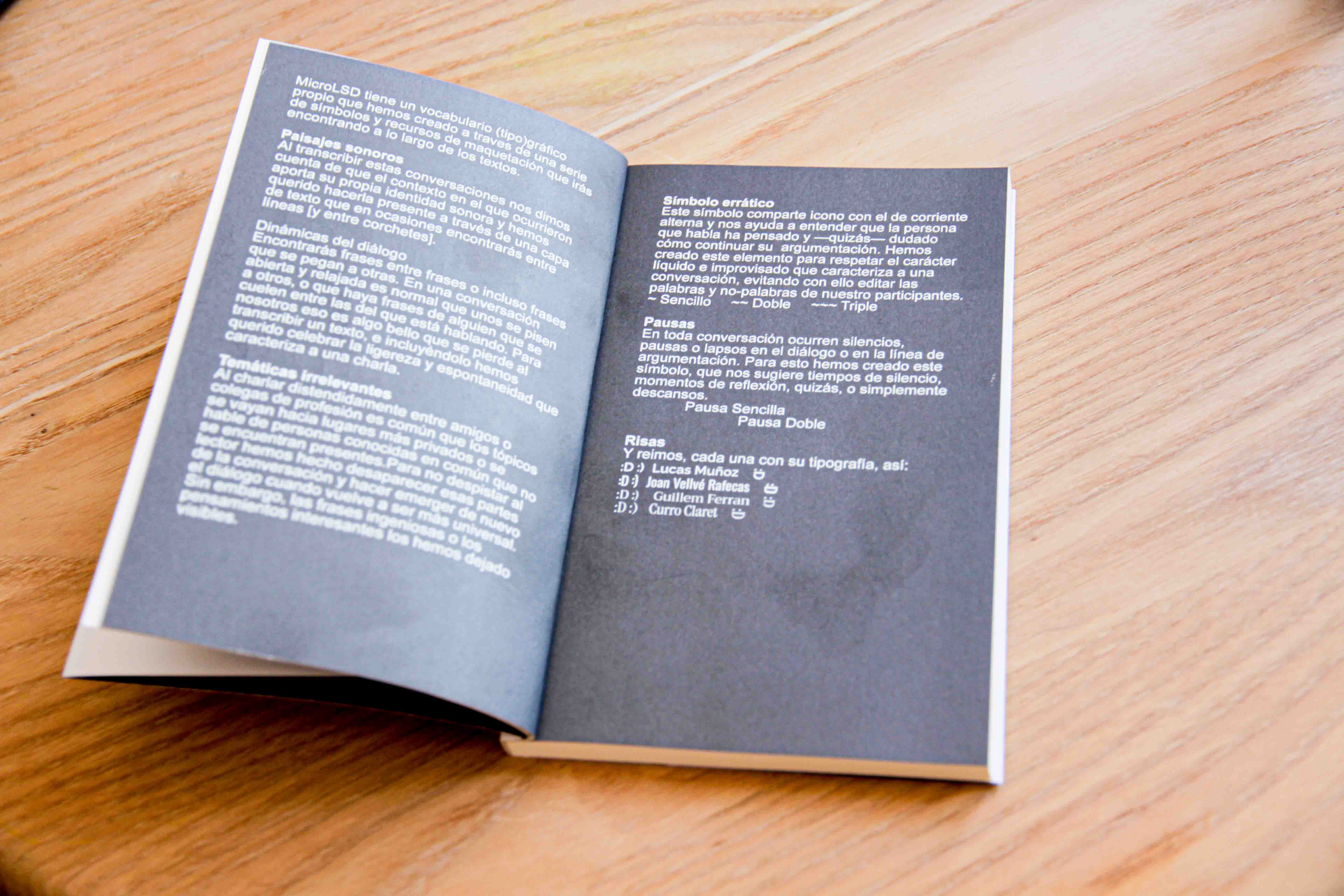
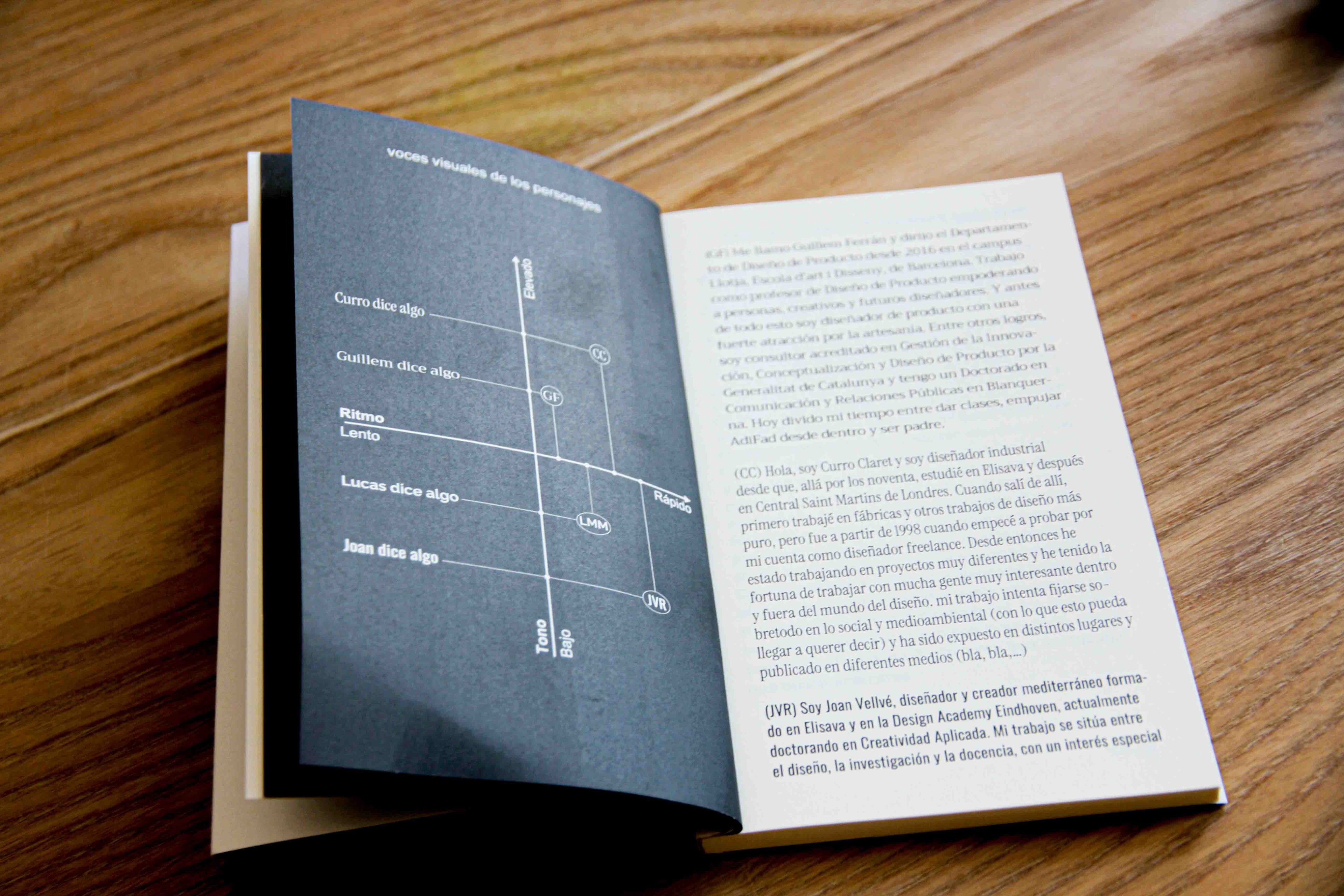
Lucas Muñoz describes Guillem in his preface as an almost academic, methodical conversationalist: one who returns to loose threads, insists on naming variables before dismissing them, and works to keep the conversation self-correcting. Where Curro Claret delivers sharp, concentrated arguments and waits for silence before speaking, Guillem builds in spirals — expanding, qualifying, catching himself in contradictions and exploring them. His is the voice most likely to ask “but what do we actually mean by that?” — and to insist on an answer.
Proximity as practice, not geography
Guillem’s central contribution is a reframing of what cecórcanía means. Using the Foundawtion project by Marc Morro — a furniture-making manual designed in Barcelona for craftspeople in Senegal — he argues that physical distance is not the relevant variable. A project is "cercano" when the designer has invested sustained time in understanding the context, when the work has matured over years rather than weeks, and when the design responds to the specific capacities of the people it is made with. Closeness is a quality of process, not of postcode. The corollary is his concept of “social washing” — borrowed from greenwashing in ecological design — for projects that claim social purpose while skipping the slow work of actually being present.
Craft, collaboration, and the limits of the drawing
A sustained thread concerns the designer-craftsperson relationship. Guillem draws on the Oficis Singulars project. These are the constraints design must work within, and they are only discoverable through presence. He is also critical of the model in which a designer sends a drawing and disappears, noting that artisans have historically borne the cost of failed collaborations.

Teaching uncertainty
As head of the Product Design department at Escola Llotja, Guillem brings consistent pedagogical urgency to the conversation. His most pointed observation is about assessment: the projects that receive the highest marks tend to have perfect technical drawings and conventional product logic; the project he finds most interesting is one that places the student in vulnerability and opens questions rather than closing them. “We are interested in working with people who know that they don’t know,” he says — and acknowledges that defending this in institutional panels is a recurring struggle. Behind it is a deeper argument: measuring design impact through KPIs rewards the wrong things, and an honest account of a collaborative project must include transformations in the people who made it, which cannot be counted.

Three kinds of closeness
Toward the end of the conversation Guillem distinguishes three forms of cecórcanía: proximity with process (the sustained contact with materials, people, and context that produces knowledge unavailable any other way); emotional proximity between a person and an object (the pebble from the beach you would never throw away); and the intellectual closeness of the gremio — the professional community that shapes what designers see, make, and value. These three are not always compatible, and the book leaves their tensions productively unresolved